Hidden high on the Pajarito Plateau in northern New Mexico, Los Alamos became known to the world as “The Secret City” during World War II. In 1943, the United States government selected the isolated mesa community as the location for Project Y - the top-secret laboratory of the Manhattan Project tasked with developing the world’s first atomic weapons.
Under the leadership of physicist J. Robert Oppenheimer and General Leslie Groves, thousands of scientists, military personnel, workers, and families relocated to Los Alamos in secrecy. Mail was addressed only to “P.O. Box 1663, Santa Fe, New Mexico,” and many residents could not tell family members where they lived or what work they were doing.
Long before Los Alamos became the Secret City, the Pajarito Plateau was home to generations of Indigenous communities. Ancestral Pueblo people lived throughout the region for centuries, building villages, farming the mesas, and creating pathways that still shape the landscape today. Archaeological sites throughout the area offer insight into the deep cultural history of northern New Mexico and the enduring connection nearby Pueblo communities continue to have with the region.
Beginning in the late 1800s, homesteaders and ranching families settled the mesas and canyons around present-day Los Alamos. Small homesteads, cabins, and ranch properties became part of the growing story of the plateau, while nearby Hispanic communities contributed to the cultural traditions and identity of the region.
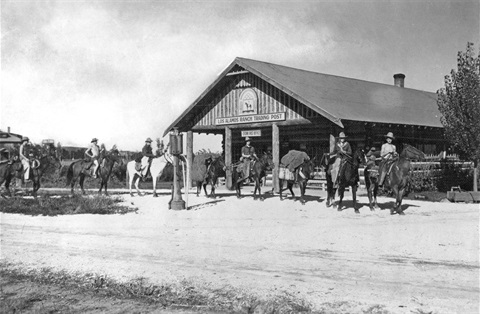
In 1917, educator Ashley Pond founded the Los Alamos Ranch School, an elite boys school that combined academics with outdoor education and life in the mountains. Students rode horses to class, lived ruggedly, and explored the forests and canyons that surround Los Alamos today. Many of the school’s original buildings still stand and later became incorporated into the Manhattan Project during World War II.
On July 16, 1945, scientists from Los Alamos helped conduct the Trinity Test in southern New Mexico - the world’s first detonation of a nuclear weapon. Less than a month later, atomic bombs developed in Los Alamos were dropped on Hiroshima and Nagasaki, helping bring World War II to an end and forever changing global history.
Following the war, Los Alamos evolved from a closed military community into a permanent town centered around science, research, and innovation. Los Alamos National Laboratory continues to operate today as one of the nation’s leading scientific institutions, while the community itself has grown into a unique destination where history, culture, and outdoor adventure intersect.
Today, visitors can explore the stories behind the Manhattan Project, discover the legacy of J. Robert Oppenheimer and the scientists who lived here, experience the continued innovation of Los Alamos National Laboratory, and enjoy the remarkable landscapes that have shaped life on the Hill for generations.
Whether you are here to walk through history, learn about the people who transformed modern science, or simply experience the unique character of this mountain community, Los Alamos offers a story that continues to evolve.